
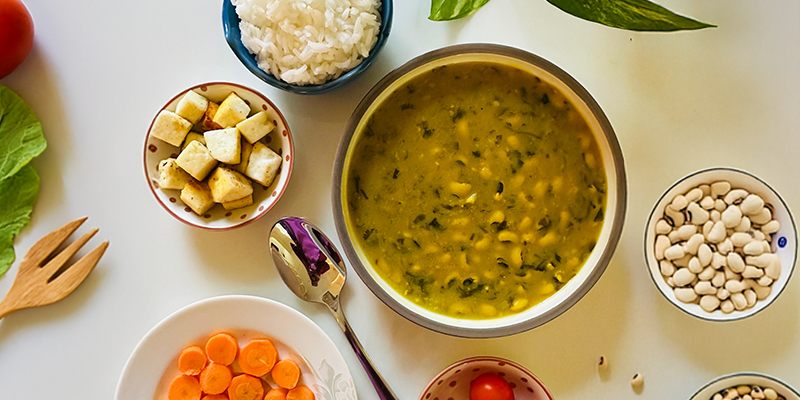
Let’s Make Rice Protein-Rich – But First, Let’s Understand Why
Asian food, especially Indian food, is traditionally carbohydrate-heavy.Rice, roti, dosa, idli — carbs have always been the backbone of our meals. Even today, when families shop staples through Organic Grocery Online, rice continues to dominate most plates.
Earlier, despite carb-rich diets, obesity and lifestyle disorders were rare. Why?Because our physical activity levels were naturally high — walking everywhere, manual household work, physically demanding jobs, and minimal screen time.
Fast forward to today:
- Long desk hours
- Minimal movement
- Screens for work and entertainment
- But the same carb-heavy eating patterns
This mismatch between high carbs + low movement is one of the biggest contributors to lifestyle disorders today.
The solution is not abandoning traditional food.The solution is rebalancing it .
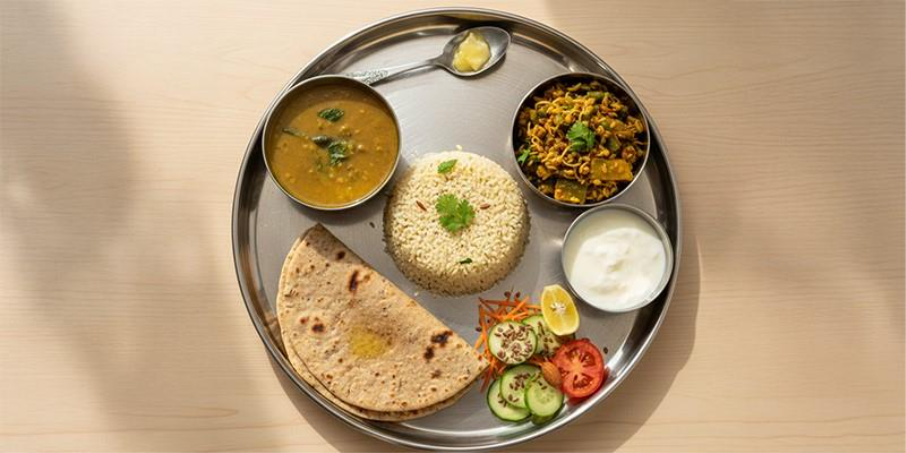
My Everyday Cooking Philosophy
When I cook for my family, I always keep our current lifestyle in mind.My focus is simple:
- Increase protein
- Reduce excessive carbs
- Retain traditional flavours and recipes
Along with balanced meals, I also believe that ingredient quality matters — whether it’s daily cooking essentials, seasonal produce from Organic Fruits Online, or clean snacks like Organic Dates and Organic Sunflower Seeds.
Today, I’m sharing one such recipe — a traditional preparation made protein-rich with simple tweaks
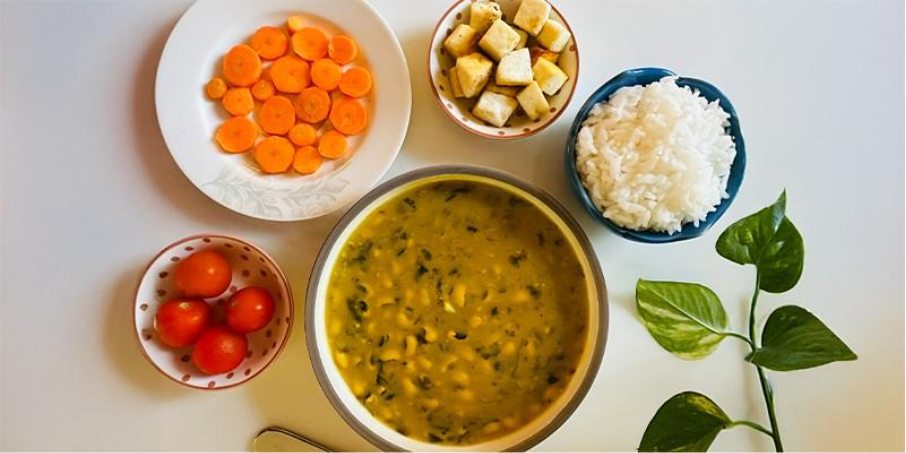
Recipe: Heritage Protein Soup Curry
I call this a “soup curry” because:
- You can drink it like a soup
- Or enjoy it as a curry with rice or roti
Just remember: make this the hero of your plate, not the rice or roti.
Ingredients
- 1 tbsp Besan (chickpea flour)
- 1 cup Organic cowpea (lobia)
- 1 cup finely chopped onions
- 5–6 curry leaves
- 4 green chillies
- 1 tsp organic cumin seeds
- ½ tsp organic turmeric
- 1 tbsp organic cold-pressed groundnut oil
- Rock salt to taste
- Water as required
Using clean, traceable ingredients sourced via Organic Grocery Online ensures better digestion and nutrient absorption.
Method
- Soak cowpeas overnight and pressure-cook until soft. Keep aside.
- Finely chop onions.
- Coarsely grind green chillies, curry leaves, and cumin in a mixer.
- Heat oil in a pan. Add the coarse paste and sauté gently.
- Add onions and cook until soft. Add rock salt while cooking.
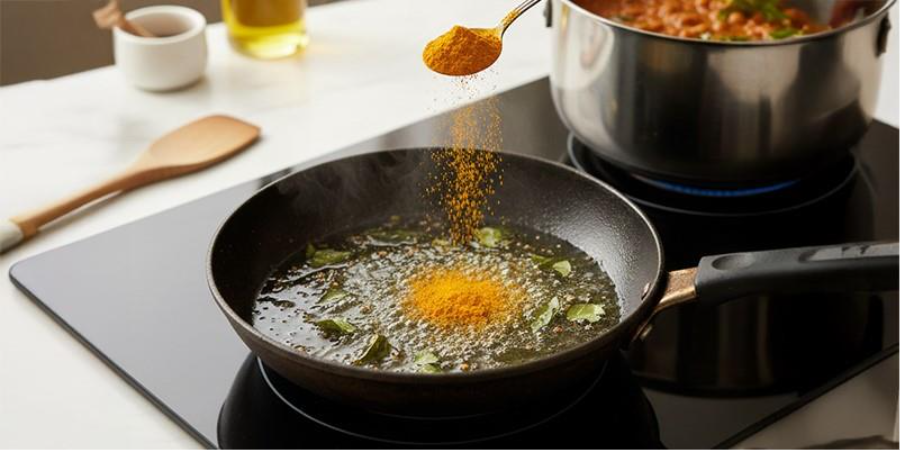
- Add turmeric and sauté briefly (science explained below ?).
- In a separate bowl, mix 1 tbsp besan with ~500 ml water, ensuring no lumps.
- Add this besan liquid to the sautéed mixture and bring to a boil, stirring continuously so it doesn’t thicken.
- Once half-cooked, add the cooked cowpeas.
- Simmer and boil for 15 minutes until the raw aroma disappears. Your protein-rich soup curry is ready.
Why Turmeric Is Added During Tempering (Scientific Explanation)
Turmeric contains curcumin, a powerful anti-inflammatory compound.
- Curcumin is fat-soluble, not water-soluble
- When turmeric is added to hot oil, curcumin dissolves into the fat
- This significantly increases its bioavailability, meaning your body absorbs it better
- Heat also helps break down turmeric’s cell structure, releasing its active compounds
This is why traditional Indian cooking wisely uses turmeric in tempering — it’s ancient science backed by modern research
Protein Breakdown (Very Important)
Cowpea (Lobia)
- 100 g dry cowpeas provide ~24–25 g protein
Cooked cowpeas provide ~8–9 g protein per 100 g
Besan (Chickpea Flour)
- 1 tbsp contributes ~3–4 g protein
A2 Paneer (Serving Suggestion)
- 100 g A2 paneer provides ~18–20 g protein
When you pair this soup curry with sautéed A2 paneer, you get a complete, high-quality protein meal
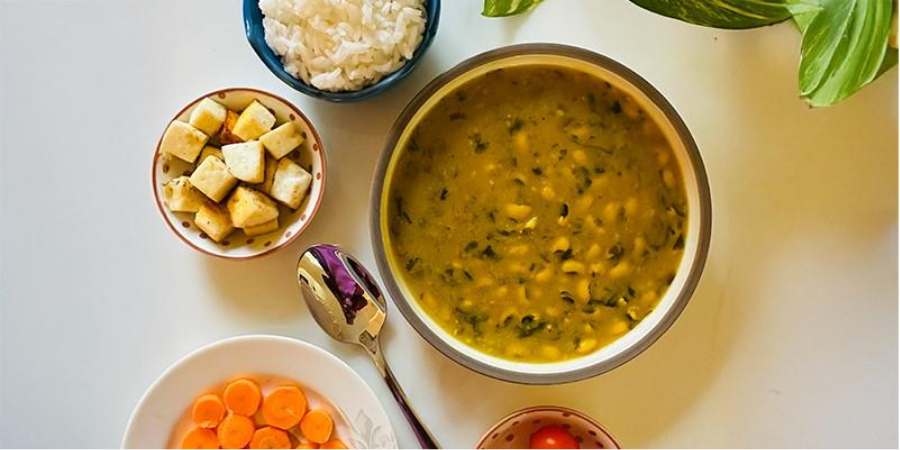
How This Makes Rice Protein-Rich
Instead of increasing rice:
- Increase soup curry
- Add paneer on the side
- Reduce rice quantity naturally
That’s how rice becomes protein-supported, not carb-dominant.
Completing the meal with light fruits sourced from Organic Fruits Online keeps digestion easy and balanced.
Final Thought
Traditional food doesn’t need replacement — it needs rebalancing.
This Heritage Protein Soup Curry is proof that:
- You can eat Indian
- You can eat comfort food
- And still eat smart
Tell me — how soon are you trying this recipe?
-
 March 6th, 2026
 -
Understanding Chemical-Free Eating: What It Means for Your Daily Grocery Choices
February 27th, 2026 -
 February 23rd, 2026
 -
Product Spotlight: Cold-Pressed Oils – Health Benefits & Usage
February 23rd, 2026 -
When Gluten Became the Problem — And Ancient Grains Became the Answer
February 6th, 2026